
Degenerative Disc Disease Care in Hutchinson
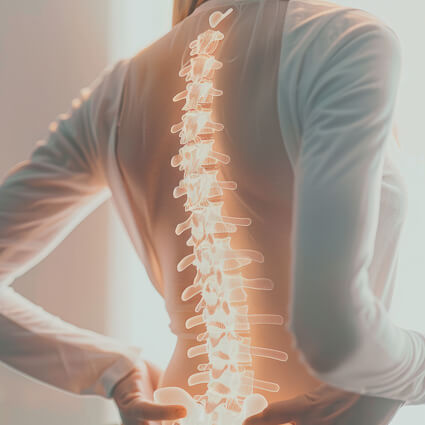 Being told your back pain is “just part of getting older” can feel incredibly discouraging. At Caspers Chiropractic Center, we look beyond the diagnosis to assess how your spine moves, where discomfort may be coming from, and what care options might help you stay active.
Same Age, Different Wear
Degenerative disc disease describes changes to the cushioning discs between your vertebrae, including a loss of disc height. It may also occur alongside narrowing joint spaces and bone spurs. On X-rays, Dr. Caspers often points out a worn segment beside one with much less degeneration, even though they’re the same age. Age isn’t the only factor. Previous injuries, repetitive loading, genetics, and other influences may all play a role.
When Work, Sport, and Old Injuries Load the Spine
Repetitive movements and physical demands may contribute to spinal discomfort, particularly when certain joints aren’t moving comfortably. That applies to competitive athletes and to what Dr. Caspers calls “occupational athletes” on a manufacturing floor or farm. Patients may experience:
- Low back or neck pain that builds through the workday
- Stiffness getting in and out of a car or tractor
- Pain returning years after a spinal fusion, sometimes at a different level
- Relying on ibuprofen, a heating pad, or avoiding certain movements
Looking Beyond the Static MRI
An MRI provides valuable structural information, but it doesn’t tell the whole story of how you move. Our evaluation considers spinal mobility, posture, and areas of restricted movement. Depending on the findings, Dr. Caspers may recommend specific chiropractic adjustments aimed at improving joint mobility and comfort.
After a spinal fusion, we don’t attempt to move fused segments. Instead, we assess the surrounding joints to determine whether chiropractic care may be beneficial.
Dr. Caspers compares it to uneven tire wear. When a car isn’t moving or aligned as it should, the tires may wear differently. Similarly, he looks at how different parts of the spine move and work together. Addressing movement restrictions may help with discomfort and everyday function, even though the degenerative changes remain.
Making the Most of Your Mobility
Moderate disc degeneration doesn’t necessarily mean giving up the activities you enjoy. While chiropractic care can’t reverse changes to a worn disc, it may help with related stiffness and discomfort. Our focus is on helping you move more comfortably, whether that means getting through a full shift or spending time on the floor with your grandkids. Periodic progress exams help us reassess mobility, posture, and your response to care.
Frequently Asked Questions
Is degenerative disc disease just a normal part of aging?
Can chiropractic help if I’ve already had a spinal fusion?
Will chiropractic care rebuild my disc?
What happens at my first visit?
Ready to Talk About Your Next Steps?
Disc degeneration doesn’t mean you have to stop asking questions about your options. Contact Caspers Chiropractic Center or call (320) 587-2292 to schedule an assessment and discuss ways to manage discomfort and stay active.